Constitution Implementation: Expectation and Reality
September 23, 2024
Issr
Authors: Ankit Raj Suwal, Anushka Tuladhar and Bhupendra Rawal
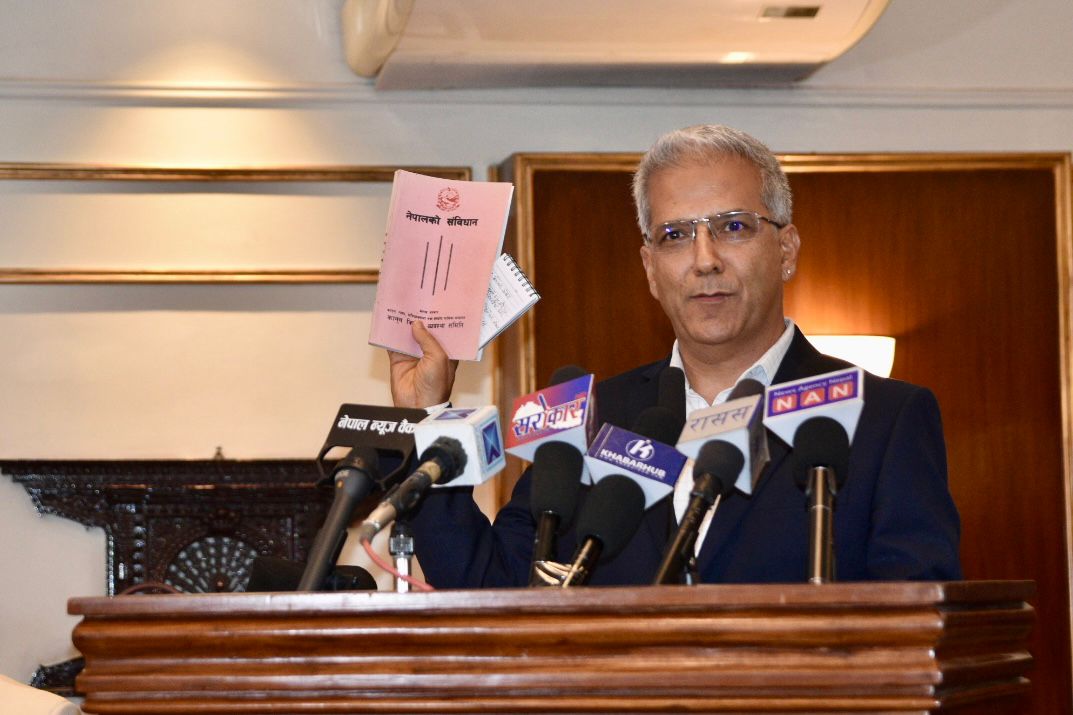
After a decade of implementing the 2015 Constitution, various discourse on the effectiveness, inclusivity, and the possibility of amendments has been pressing issues today. In view of this, the Constitution Watch Group and the Institute for Strategic and Socio-Economic Research (ISSR) jointly organized a high-level interaction program on Sept. 23, 2024, at Malla Hotel, Kathmandu. The event brought together key political leaders, constitutional experts and policy makers.
The program delved into the challenges of implementing the constitution, roles of federal and provincial government and the ongoing political instability affecting development and governance. The discussion was focused around the need to distinguish between issues stemming from poor implementation and those asking for a just constitutional amendment. Key figures including former Chief Justice Kalyan Shrestha, former Prime Minister Pushpa Kamal Dahal, and other senior leaders from major political parties offered diverse yet insighful perspectives.
Themes such as proportional representation, federal authority, bureaucratic reform, fiscal decentralization, and public trust in the constitution were critically examined. Despite divergent viewpoints, a shared recognition emerged: Nepal must first prioritize effective implementation, foster legal accountability, and build political consensus before initiating amendments. The insights drawn from this interaction provide a valuable foundation for informed national dialogue on the future of Nepal’s constitution and democratic governance.